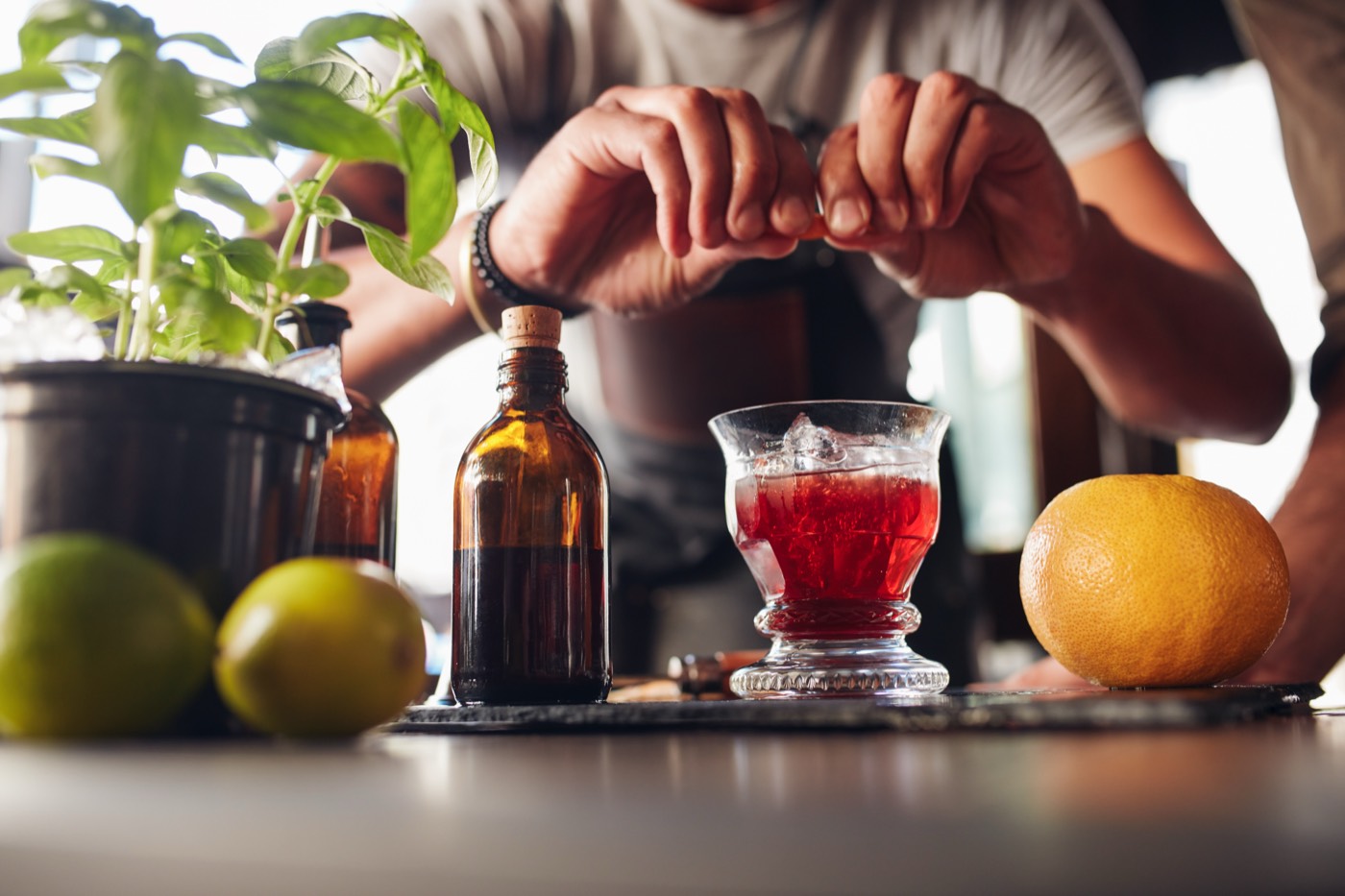
The easiest mistake in alcohol-free drinks is thinking of alcohol as the thing you remove and nothing else. But alcohol was never just the buzz. In a classic cocktail it is doing a surprising amount of invisible work: it carries aroma to your nose, it adds a faint warmth and bite, it gives the liquid weight and a longer finish, and it ties sweet, sour, and bitter together so they read as one drink instead of a list of ingredients. Take it out and none of that work disappears — it simply has to be done by something else. A good alcohol-free cocktail is the craft of putting all of it back.
A good alcohol-free cocktail is the craft of putting back everything the alcohol was quietly doing.
It starts with balance, because balance is what makes a drink taste finished rather than flat or cloying. Almost every great sour — a whiskey sour, a margarita, a daiquiri — is the same simple argument between something sour and something sweet, held in tension. Two ounces of spirit, roughly an ounce of fresh citrus, a bit less sweetener: get that ratio right and the drink snaps into focus. Get it wrong and no premium ingredient will save it. Taste as you build, and trust your palate over the recipe. A lime in July is not the same as a lime in January, and the drink should be adjusted to the fruit in front of you, not the number on the page.
Fresh is not a garnish-level detail; it is the whole game. Bottled lime juice tastes cooked and dull, and in a drink with no alcohol to hide behind, that dullness is all you taste. Squeeze the citrus. Make the simple syrup instead of reaching for a bottle of corn syrup. Use good tonic and open it fresh so it is still sharp with carbonation. When there is nowhere to hide, the quality of what you pour in is exactly the quality of what you drink.
Then there is body — the single hardest thing to replace. Alcohol gives a cocktail a certain viscosity and slip across the palate, and without it many mocktails come across as thin or watery. This is where technique earns its keep. A dry shake with aquafaba or egg white builds a silky, almost creamy texture — a richness not unlike a milkshake for grown-ups — that turns a thin sour into something you feel as much as taste. A quality non-alcoholic spirit built to deliver that structure helps too. So does a touch of something viscous, like a good syrup or a spoon of fruit, used with restraint.
Aroma is the next quiet workhorse. So much of what we call flavor is actually smell, and alcohol is a natural carrier of it. Replace that with intention: express a citrus peel over the surface so its oils fan across the top of the drink, muddle mint gently — gently, because bruising it turns it bitter — and lean on non-alcoholic bitters, which add the length, complexity, and faint dryness that alcohol used to provide. A few dashes of bitters can be the difference between a drink that stops short and one that lingers.
Temperature and dilution are the least glamorous and most decisive part of the whole thing. A cocktail is supposed to be very cold, and the ice that chills it also waters it down by design — the small amount of dilution is what rounds the edges and makes everything drinkable. Shake or stir with plenty of ice until the outside of the vessel frosts, then strain over fresh, large cubes that melt slowly so the drink holds its balance instead of turning to water halfway down. A warm, under-diluted mocktail tastes harsh and syrupy; a properly chilled one tastes complete.
None of this is difficult, and that is the point. These are learnable, repeatable habits — balance the ratio, use fresh ingredients, build body, layer in aroma, get it cold — and each one is worth understanding on its own. Do them and an alcohol-free drink stops feeling like a compromise and starts feeling like a choice. That is the whole difference between a drink that is assembled and one that is crafted.
The Cr(af)ted Take
The reason all of this matters is that an alcohol-free cocktail should never be defined by what is missing from it. When you replace the structure, the aroma, the body, and the finish, you are not apologizing for the absence of alcohol — you are proving it was never the point. Great drinks were always about balance, temperature, freshness, and care. Alcohol was one tool among many, and it turns out you can make something genuinely worth savoring without it.
So the honest answer to what makes a good alcohol-free cocktail is the same answer that makes any good cocktail good: attention. Pour with intention, taste as you go, and treat the drink as something worth getting right. Do that, and no one at the table will feel like they settled.