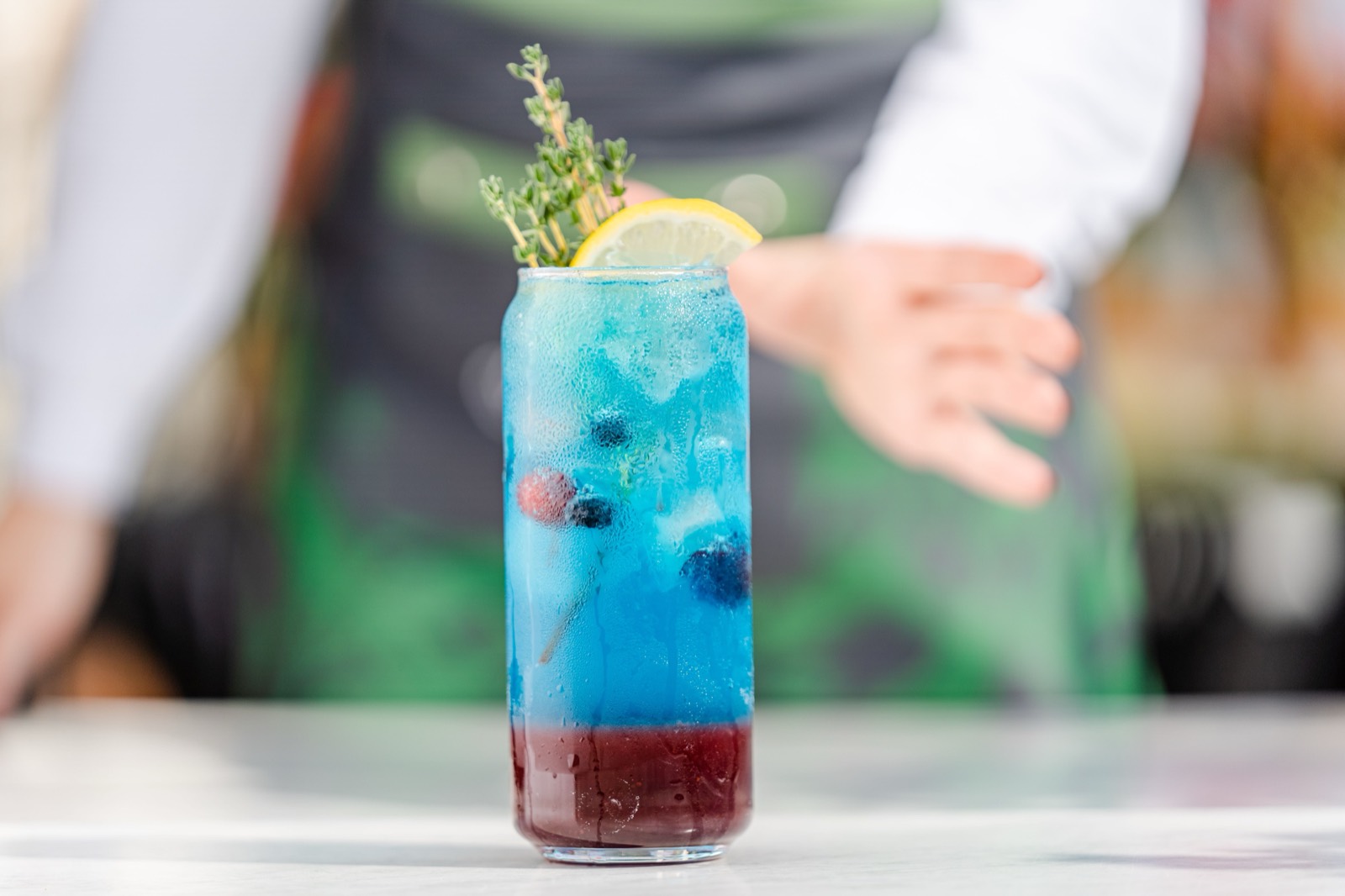
Order a mocktail at most restaurants and you will get something sweet. Muddled fruit, a heavy splash of juice, a generous pour of syrup, maybe a sugared rim. It tastes nice for the first two sips and cloying by the fifth. This is the single most common failure in alcohol-free drinks, and it comes from a reasonable-sounding instinct: without alcohol, sweetness is the easiest way to make a drink taste like something. The problem is that a real cocktail was never mostly sweet — and when you overcorrect with sugar, you end up with a drink that reads as juvenile rather than sophisticated.
Sugar is the easiest way to make a drink taste like something — and the fastest way to make it forgettable.
Think about the cocktails people actually love. A Margarita is bracingly tart. A Negroni is bitter. A Whiskey Sour holds sweetness against a hard hit of lemon. Sugar is present in all of them, but it is kept in tension by acid, bitterness, and dilution — never allowed to run the show. Alcohol itself also cuts sweetness: it is dry, and it adds a warmth and a faint burn that keeps a drink from sliding into dessert. Remove it and, if you are not careful, nothing is left to push back.
The fix is not to make drinks bland. It is to build the other dimensions back up so the sweetness has something to balance against. Reach for more acid than you think you need — fresh citrus, a good tart shrub. Add bitterness, the flavor alcohol-free drinks most often lack, with non-alcoholic bitters or a bitter aperitivo. Let cold and dilution round the edges. Then taste as you build, and stop adding sweetener the moment the drink stops tasting sharp. A great alcohol-free drink should make you want the next sip. Sugar, past a certain point, does the opposite.
The Cr(af)ted Take
The sweetness problem is really a respect problem. When a bar treats the alcohol-free option as a fruity afterthought, it is quietly telling the non-drinker that their drink does not need to be taken seriously. Building a dry, balanced, grown-up alcohol-free cocktail says the opposite — that this drink was made with the same intention as everything else on the menu.
It is also the fastest way to change someone's mind about what alcohol-free can be. Hand a skeptic something bitter and complex instead of something sweet, and you can watch the assumption fall away in real time. Restraint with sugar is not a limitation. It is the whole point.